The way audiences consume entertainment has changed profoundly as physical media and fixed television schedules have gradually given way to instant digital access. Collecting DVDs, waiting for a scheduled broadcast, or planning an evening around a particular television program is increasingly replaced by the convenience of opening a browser and accessing a broad entertainment catalog whenever the moment feels right. For anyone looking to watch movies online, this shift represents more than a change in technology; it reflects a broader transformation in how entertainment fits into everyday life.
Cloud-based streaming has made viewing considerably more compatible with modern routines. Students can choose entertainment between study sessions, professionals can unwind after work without depending on a television timetable, and families can access content when their schedules finally align. The important development is not simply the availability of digital files, but the removal of unnecessary preparation between choosing something to watch and actually watching it. A well-designed streaming platform turns that distance into a simple transition from catalog shelf to playback screen.
This model also changes expectations around accessibility. Instead of treating entertainment as something stored in a particular physical location, modern streaming treats the catalog as an always-available digital environment. The result is a more flexible experience in which the viewer determines when and where entertainment begins, without having to organize their routine around the limitations of traditional media.
Entertainment Free from Traditional Programming Constraints
Streaming has fundamentally altered the relationship between audiences and programming schedules. Traditional broadcasting places content into predefined time slots, requiring viewers to adapt their availability to the broadcaster’s timetable. On-demand platforms reverse that relationship. The catalog remains accessible, while the viewer decides when a particular session begins. This seemingly simple change has become one of the defining characteristics of contemporary digital entertainment.
A clean catalog interface is particularly important in this environment because convenience depends on reducing the distance between discovery and playback. When navigation is straightforward, viewers can move through categories, recognize available titles, and begin watching without unnecessary intermediate steps. The strongest experiences avoid turning access into a sequence of forms, registration prompts, intrusive advertising windows, or distracting pop-ups. Instead, the interface keeps attention where it belongs: on discovering and enjoying content.
Moviewala’s usability follows this broader philosophy of frictionless streaming. A viewer can browse the digital shelf, select a title, and move directly toward playback without being forced through a sign-up wall before reaching the entertainment itself. This creates a notably lighter interaction model. High-quality streaming becomes less about managing an account and more about giving users immediate control over their viewing session.
The distinction matters because modern audiences increasingly expect digital services to respect their time. Removing unnecessary barriers does not mean reducing sophistication. Behind a simple interface can sit a complex content-delivery system, responsive search architecture, media processing, and playback optimization. The visible experience remains calm precisely because much of the technical complexity operates quietly in the background.
Multi-Device Synchronization and Interface Usability
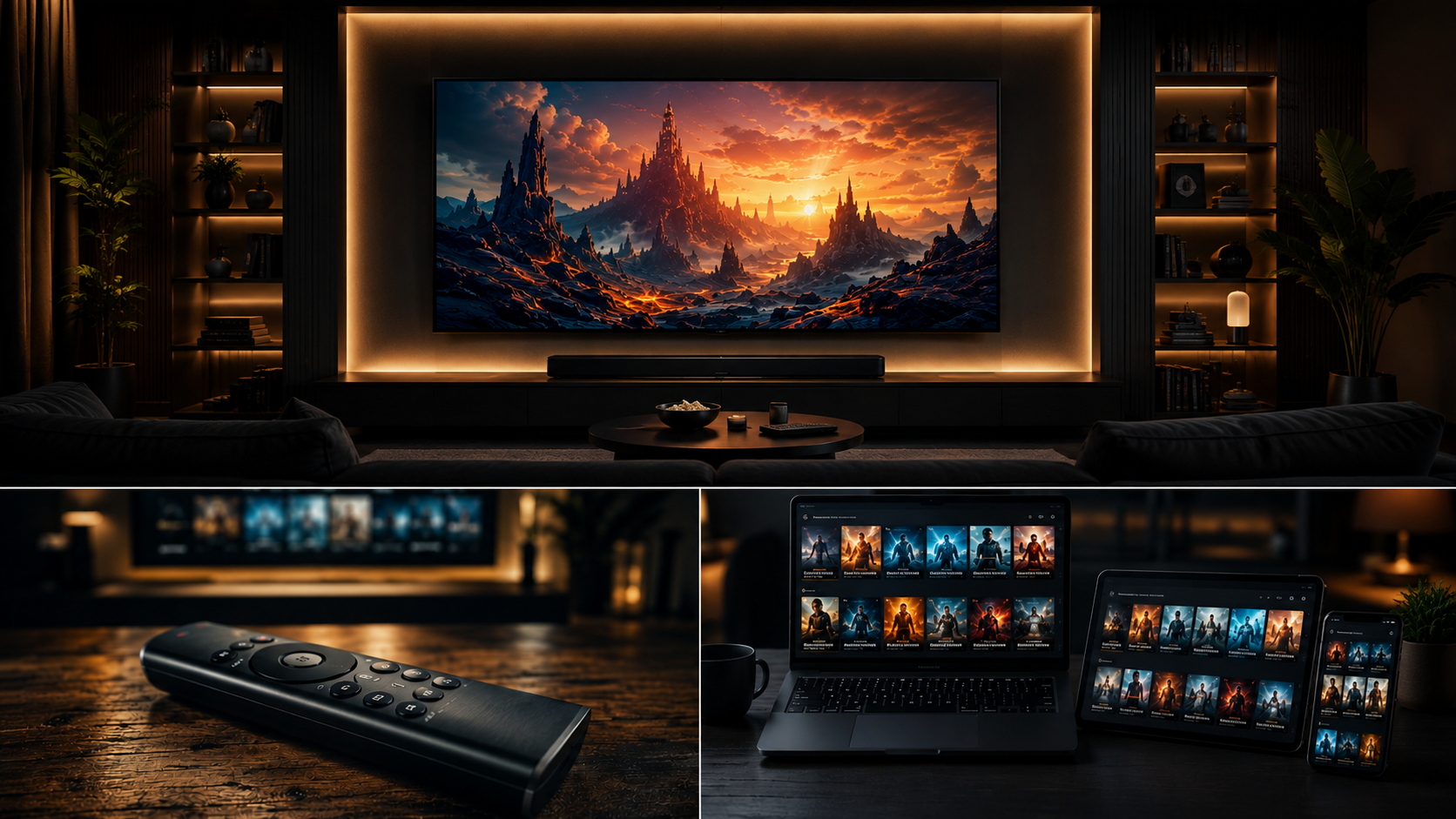
The contemporary streaming environment is no longer tied to a single screen. Smart televisions provide a natural setting for longer viewing sessions, while laptops remain practical for flexible desktop access. Tablets and smartphones extend the same entertainment environment into bedrooms, commutes, breaks, and other moments when a larger display is unavailable. Supporting these different formats requires more than simply making a webpage responsive; the underlying service must accommodate varying screen dimensions, connection conditions, input methods, and performance capabilities.
A polished streaming interface therefore needs to remain recognizable and intuitive regardless of the device being used. Navigation should feel natural on a television remote, a laptop trackpad, a tablet touchscreen, or a smartphone display. Content shelves, categories, search functions, and playback controls need to remain visually clear without overwhelming smaller screens. This consistency helps make streaming feel like one continuous service rather than several disconnected versions of the same platform.
Content discovery is equally important. Large digital catalogs can quickly become difficult to navigate when they rely on old-fashioned alphabetical menus or overly complicated interfaces. Modern organization instead uses recognizable categories, intuitive filtering, thematic shelves, and curated collections to reduce the amount of searching required. These tools allow viewers to move naturally from general browsing toward something that matches their immediate interests without making the discovery process feel like administrative work.
The best user experience also minimizes interruption between discovery and playback. One-click access from a catalog shelf can make a meaningful difference because the viewer does not have to repeatedly open unnecessary pages or navigate through layers of promotional material. Combined with high-quality playback and an absence of intrusive pop-ups, this creates a streamlined environment in which the technology supports the viewer rather than competing for attention.
Infrastructure, Playback Consistency and Future Trends
Behind every apparently effortless streaming session is a sophisticated infrastructure designed to move large volumes of audiovisual data efficiently. Modern platforms depend on distributed cloud networks, content delivery systems, adaptive bitrate technology, and advanced compression methods to balance image quality with available bandwidth. Rather than delivering an identical data stream to every viewer, contemporary playback systems can adapt to changing network conditions, helping reduce buffering and maintain a stable experience.
Compression technology plays an especially important role in this process. High-resolution video contains enormous quantities of visual information, so efficient encoding allows platforms to deliver detailed imagery without requiring impractically large data transfers. Content delivery networks then place media closer to audiences geographically, reducing the distance data must travel and helping improve responsiveness. Together, these technologies form the largely invisible foundation of the modern streaming experience.
Future developments are likely to make digital entertainment even more adaptive. Faster networks, more efficient codecs, increasingly capable cloud infrastructure, and smarter personalization systems can make large catalogs easier to navigate while improving playback reliability across different connection types. Recommendation and discovery technologies will also continue evolving, potentially making the relationship between a viewer’s preferences and a platform’s catalog feel increasingly intuitive without sacrificing user control.
Ultimately, the appeal of modern streaming lies in how little effort is required from the viewer. There is no need to plan around a television schedule, maintain a physical collection, or pass through unnecessary registration barriers simply to begin browsing. The experience can remain remarkably direct: open the home screen, choose a category, find a title, press play, and let the catalog and its underlying infrastructure handle the rest.